
Every founder starts here: an idea, not much cash, and a long list of reasons to wait. I've started seven businesses, most of them with close to nothing in the bank, one of them acquired by a French group. This is the version of that advice specific to Ireland — the supports, the shortcuts, and the mistakes worth skipping.
You need less capital than you think
The biggest barrier to starting a business isn't money — it's the belief that you need a lot of it before you're allowed to begin. Every business I've built started with limited personal capital. What actually moved things forward was resourcefulness: showing up to the right rooms, asking for help before I felt ready, and using free or near-free infrastructure until revenue justified spending.
Where to find real funding in Ireland
Ireland has more early-stage support than most founders realise, but it's scattered across a few key doors:
- Local Enterprise Offices (LEOs) — the first stop for almost any Irish founder. LEOs offer feasibility grants, priming grants, mentoring, and free training for early-stage and pre-revenue businesses. If you do nothing else on this list, start here.
- Enterprise Ireland — for higher-growth, export-oriented, or innovation-driven businesses, once you're past the very earliest stage.
- Startup competitions and pitch events — often under-used. Many offer cash prizes, but the bigger value is credibility: winning a small, unknown competition can be the proof point that makes your next ask (a grant, an investor, a customer) easier. Apply widely rather than betting on one.
- University and council-backed programmes — if you're studying, returning to education, or near a third-level institution, these often come with funding and mentorship attached with far less competition than national schemes.
Four ways to fund a business when you have no money
These are the strategies I've actually used, not theory:
- The Showman Strategy — sell the vision before you can fund it yourself. Belief and clarity attract the people, space, and capital you can't yet afford. This is how I launched India's first web TV platform with no investment — a senior contact brought in a partner with office space and capital, and the rest built from there.
- Building in Public — sharing progress openly, rather than guarding an idea in secret, brings in feedback, credibility, and often funding faster than staying quiet ever does.
- Friends and Family — still one of the most common ways early-stage founders bridge the first six months, used carefully and honestly.
- Bootstrapping with Grants and Government Support — applying for every relevant grant or competition, cash or not, because the credibility compounds even when the cheque is small.
The mindset shift that matters more than the money
Before the funding question, there's a more useful one: why are you actually doing this? "Financial freedom" and "being my own boss" are common answers, but they rarely sustain anyone through the hard months. Understanding your real motivation — and which of three founder archetypes you fit (jump in and learn as you go, go big and commit fully, or validate small before you scale) — shapes every funding and hiring decision that follows.
Practical next steps
- Register with your Local Enterprise Office and book a free one-to-one mentoring session
- Apply for at least three grants or competitions in your first quarter, regardless of size
- Build one relationship a week inside your local startup ecosystem — co-working spaces and incubators know about opportunities before they're advertised
- Start showing your work publicly before it feels ready
Find out what you actually qualify for
Grants in Ireland aren't one-size-fits-all — what you qualify for depends on your county, stage, sector, and business structure. I'm building a free Irish Startup Grants Finder to cut through this: answer a few quick questions and get a shortlist of the LEO, Enterprise Ireland, and local schemes worth applying for.
Try the Grants Finder — coming soon.
If you're building a product company rather than a general small business, I've also put together a real list of grants and pitch competitions we applied for and won at GoPlugable → — with amounts, links, and what actually paid off.
This is the short version. The full playbook — including the funding strategies above in more depth, how to find a co-founder, what to do when it fails, and templates I've used myself — is in How to Start a Business with Almost No Money, available on Amazon in hardcover, ebook, and audiobook →
Read the book. Then let's talk.
The article gets you started. The book gets you through the messy middle. But some of it, you just can't plan for on a page.
If you've read it and you're mid-bootstrap — stuck on funding, a co-founder decision, or whether to pivot — connect with me on LinkedIn and message me for a 1:1 chat. No pitch, no funnel, just someone who's failed at this enough times to be useful.
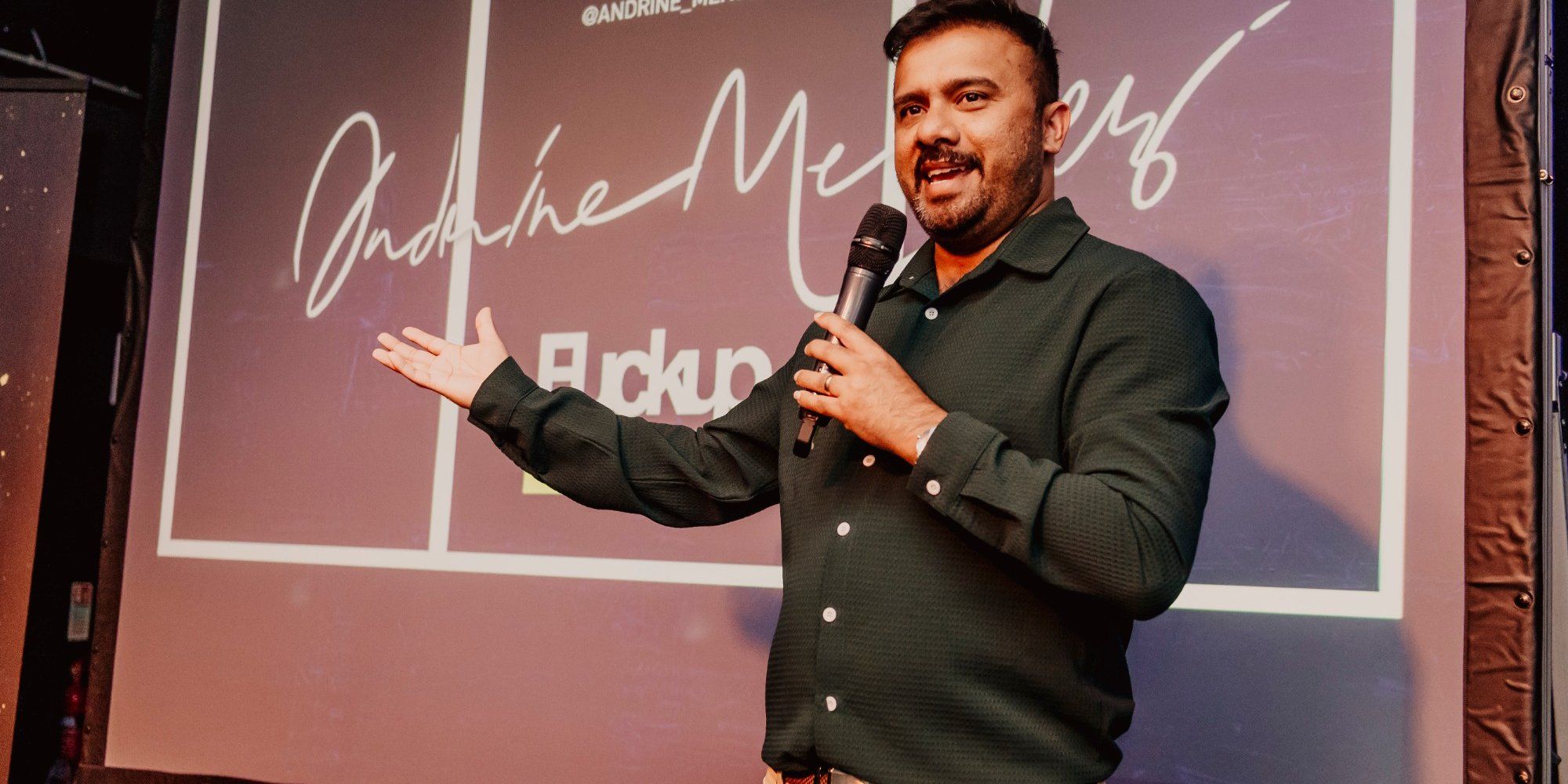
I'm also open to speaking on this topic — grants, bootstrapping, or the mindset chapter above — at events, LEOs, or in the classroom. Get in touch about speaking →

Leave a comment.
Enter your email and your comment — comments are moderated before anything is published.
Comments are moderated. Your email is never published.
Thanks — your comment is in for review.
No comments yet — be the first.